
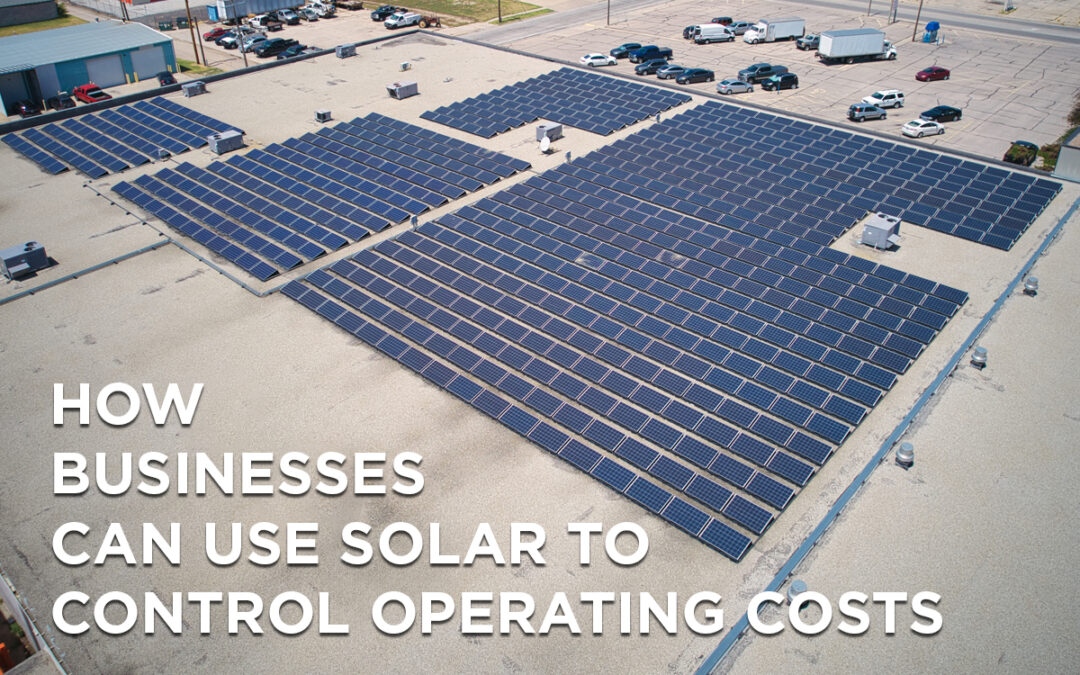
For most business owners, energy isn’t optional. Electricity is an overhead line item that climbs every year. Solar power changes that equation. Instead of reacting to unpredictable utility rate hikes, companies can stabilize one of their largest controllable expenses by generating their own electricity.
This post breaks down how solar helps businesses manage operating costs, both immediately and over the long term.
1. Turn a Variable Expense Into a Predictable Asset
Utility prices rise with inflation, fuel costs, and policy changes, none of which you can control. Installing solar gives your business the opposite dynamic: a fixed, predictable cost structure for decades. Once the system is paid off, your electricity is essentially free, aside from minimal maintenance.
That price stability improves cash-flow forecasting and protects margins, particularly valuable for manufacturers, warehouses, and large facilities with 24/7 operations.
2. Hedge Against Utility Rate Increases
Kansas and Missouri businesses have seen steady rate escalations over the past decade. Solar acts as a built-in hedge. Every kilowatt-hour your panels produce is one less you buy from the grid, shielding your company from future rate volatility.
In most cases, systems are designed to offset 60–100% of annual usage. Even partial coverage can significantly reduce exposure to cost swings.
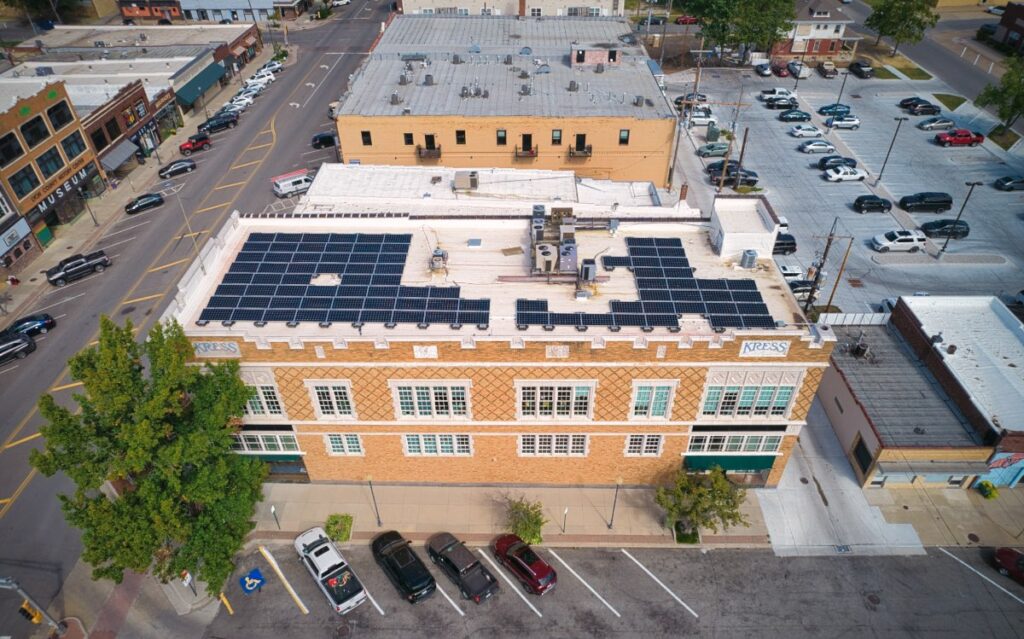
A commercial solar installation in Emporia, Kansas
3. Unlock Tax Incentives and Accelerated Depreciation
Commercial solar projects benefit from strong federal incentives:
Investment Tax Credit (ITC): 30% of system cost can be credited directly against federal taxes.
MACRS Depreciation: Most businesses can depreciate a large portion of the system’s cost in the first year, accelerating ROI.
Combined, these incentives can cut the effective system cost by 40–50%, turning solar into one of the most tax-efficient capital investments available.
4. Improve Net Operating Income (NOI) and Property Value
For property owners, solar directly improves NOI by lowering operating expenses without adding new liabilities.
Higher NOI typically translates into a higher property valuation, a compelling advantage for real estate investors or owner-occupied commercial buildings.
Additionally, sustainability credentials can attract tenants seeking green, lower-carbon spaces, particularly in corporate, university, and government procurement sectors.
5. Enhance Brand and ESG Performance
Energy independence isn’t just financial, it’s reputational. Companies that adopt solar signal environmental responsibility and long-term resilience.
This supports Environmental, Social, and Governance (ESG) goals and can improve positioning with investors, customers, and employees alike.
Even small systems can produce measurable CO₂ reductions that strengthen annual sustainability reporting.
6. Pair Solar With Energy Storage for Maximum Control
Adding a battery storage system allows your business to store excess energy and use it during peak-rate periods or outages. This further stabilizes costs and increases energy resilience, keeping critical operations running even when the grid is down.
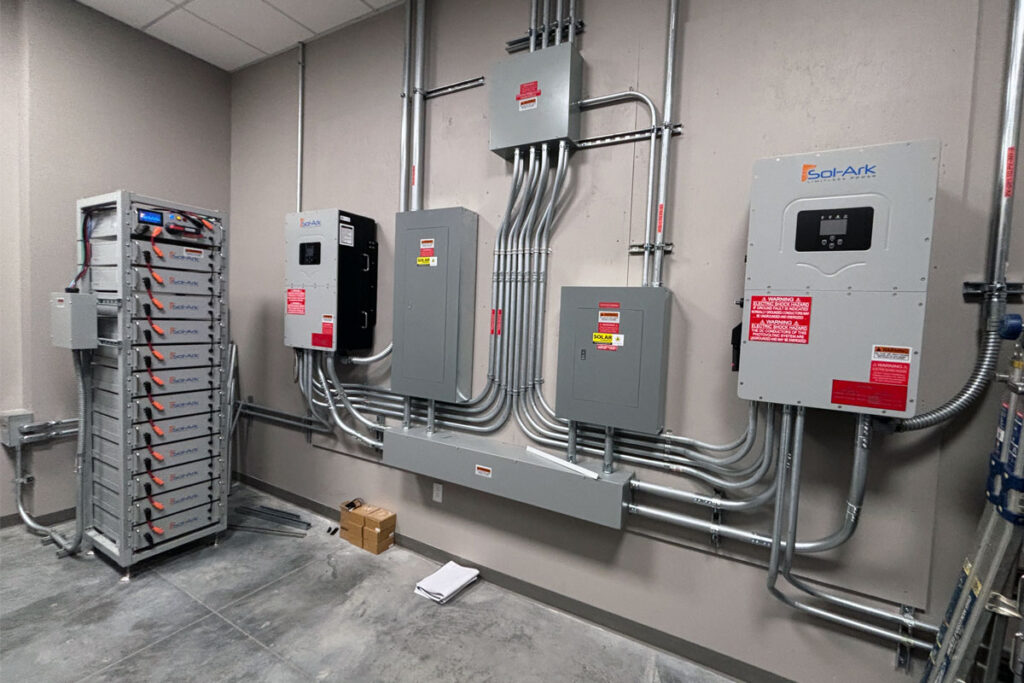
A Commercial Battery System Designed & Installed by Good Energy Solutions
7. Why Partner With Good Energy Solutions
At Good Energy Solutions, we design and install commercial solar systems tailored to each facility’s load profile and financial objectives. Our in-house engineers and NABCEP-certified installers handle every stage of the solar project, from analysis and design to permitting, installation, and monitoring.
We’ve helped regional businesses turn unpredictable energy costs into long-term savings and energy independence.
Ready to See Your Potential Savings?
We’ll evaluate your facility’s energy usage, roof or ground space, and local utility structure to show exactly how much solar can lower your operating costs.
FAQs
SEE IF YOUR HOME OR BUSINESS IS A GOOD MATCH FOR SOLAR
GET A FREE QUOTE
 Our mission at Good Energy Solutions is to provide our customers with honest, real solutions to reduce their fossil fuel consumption and lower their long term energy costs. Our combination of hands-on experience, education, and outstanding customer service make our company the clear choice to help you achieve your energy goals.
Founded in 2007 by Kevin and Shana Good, Good Energy Solutions has earned a reputation for our expert reliable service, long workmanship warranties, and quality commercial and residential solar installations.
We are engineers and craftsmen designing for efficiency while keeping aesthetics and longevity in mind. Because of our installation quality and customer service, Good Energy Solutions' solar panel systems feature some of the longest product and service warranties in Kansas and Missouri. Also, we have more NABCEP® Certified Solar Professionals on staff than any other company in Kansas or Missouri. To achieve this certification, PV installers must demonstrate that they possess extensive solar PV installation experience, have received advanced training, and passed the rigorous NABCEP certification exam.
If you would like to know more about solar power for your home or business, contact us here.