
A Clear Look at Net Metering and Evergy’s Rate History
In Kansas and Missouri, rising electricity costs are a constant concern for homeowners and businesses alike. Even modest increases in utility rates can erode household budgets and business operating margins over time. While utility companies like Evergy have worked to manage these increases, the long-term economics still favor electrification strategies that reduce dependence on central generation, especially solar combined with net metering.
At Good Energy Solutions, we help local residents and business owners take financial control of their energy costs. Below, we explain precisely how solar saves money, why net metering matters, and how utility pricing trends make solar a compelling investment.
What Is Net Metering and Why It’s a Financial Advantage
Net metering is one of the most powerful tools solar customers in Kansas and Missouri have to reduce their electric bills.
Here’s how it works, specifically for Evergy customers:
- During daylight hours, solar panels supply electricity directly to your home, reducing the amount of power you draw from the utility and greatly decreasing your effective cost per kilowatt-hour.
-
When your solar panels produce more electricity than you need, that surplus is sent back to the grid and recorded through a bi-directional meter.
-
At the end of the billing cycle, the utility compares the electricity you drew from the grid with the electricity you supplied back to it.
-
The net difference determines your bill, often resulting in significant credits for solar production.
-
Excess credits that remain at the end of a 12-month period expire but can be carried forward within those 12 months.
This means that during months when your system produces more energy than you consume, like in spring and summer, you aren’t just producing clean energy, you’re reducing your net cost of electricity dollar-for-dollar.
In Kansas, net metering is codified under state law, which requires investor-owned utilities like Evergy to offer net metering to eligible customers on a first-come, first-served basis up to a legislatively defined capacity limit.
A Closer Look at Evergy’s Net Metering Policy
Evergy’s program uses a true net metering methodology:
-
The bi-directional meter records both energy delivered to your home and energy you export to the grid.
-
At billing, delivered and received kilowatt-hours are subtracted.
-
If your solar exports exceed your usage for the billing period, Evergy credits the excess at a wholesale “avoided cost” rate.
-
Unused credits can roll forward within the annual cycle.
- Keep in mind, the energy you self-consume provides the greatest financial benefit to homeowners and businesses with solar.
Why this matters: Most solar customers generate far more electricity in the spring and summer than they consume. Net metering lets them bank those surplus kilowatt-hours and apply those credits to high-usage months in winter, drastically reducing annual utility costs.
Without net metering, solar customers would be paid a far lower rate for excess production, often just the wholesale value of that energy, rather than the full retail value that offsets what they buy later from the utility.
Why Using Your Solar Power Is Worth More Than Exporting It
When your solar panels produce electricity, that energy has two options: it can be used in your home or sent back to the grid.
Using solar energy in your home is typically more valuable because it offsets electricity you would otherwise buy at the full retail rate. That retail rate includes generation, transmission, distribution, and utility charges.
Excess energy sent to the grid is usually credited at a lower value, often based on wholesale or avoided-cost rates. In some cases, unused credits can expire or be paid out at a reduced rate.
In simple terms:
- A kilowatt-hour you use yourself avoids the full cost of electricity.
- A kilowatt-hour you export is usually worth less.
That’s why modern solar systems are often designed to maximize self-consumption, using solar energy during the day or storing it for later use, while net metering acts as a backup rather than the primary source of savings.
Solar Is Like Growing Your Own Tomatoes
Think about solar energy the same way you’d think about growing tomatoes in your backyard.
When you grow your own tomatoes and use them in your kitchen, you avoid buying tomatoes at the grocery store. You skip the store’s markup, transportation costs, and price increases. That’s where the real savings come from.
Solar works the same way.
When your solar panels generate electricity and your home uses it immediately, you avoid buying that electricity from the utility at the full retail price. You’re producing something yourself instead of paying someone else to deliver it to you.
Now consider what happens if you grow more tomatoes than you can use. You might give them away or sell them, but usually at a lower value than what you’d pay at the store. Excess solar energy works the same way. When electricity is sent back to the grid through net metering, it’s often credited at a lower rate than the cost of electricity you would otherwise buy.
The takeaway:
- The tomatoes you eat yourself save you the most money.
- The electricity you use yourself is the most valuable solar energy you produce.
That’s why solar systems are designed to prioritize self-consumption. Net metering is helpful when you have extra production, but the biggest financial benefit comes from using your own energy first, just like enjoying tomatoes straight from your garden.
Evergy’s Rising Electricity Rates
There’s a popular narrative that utility electricity rates are relentlessly increasing. However, the data for Evergy’s service territory shows a more nuanced reality:
Rate adjustments that have gone into effect are tied to regulatory approvals and infrastructure cost recovery, not unfettered price gouging. Most rate increases are tied directly to maintaining older facilities and transmission lines or adding new energy production equipment to the existing grid.
The areas covered by Evergy in Kansas and Missouri have seen periods of large cost increases and times of price stability.
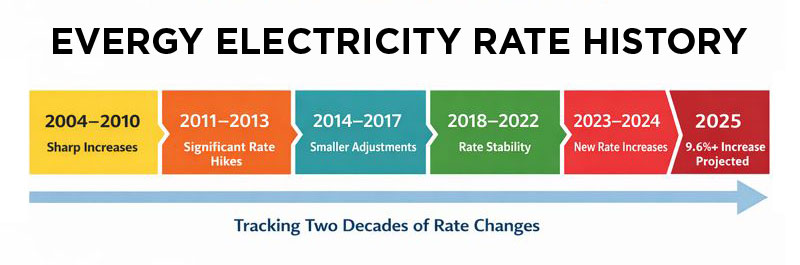 For instance, from 2019 – 2025, electricity prices in the Missouri Metro area of Evergy only saw an increase of 2.99%. On the flip side, if you go back to the time period between 2004 and 2013, one Missouri service area saw a price increase of nearly 80%.
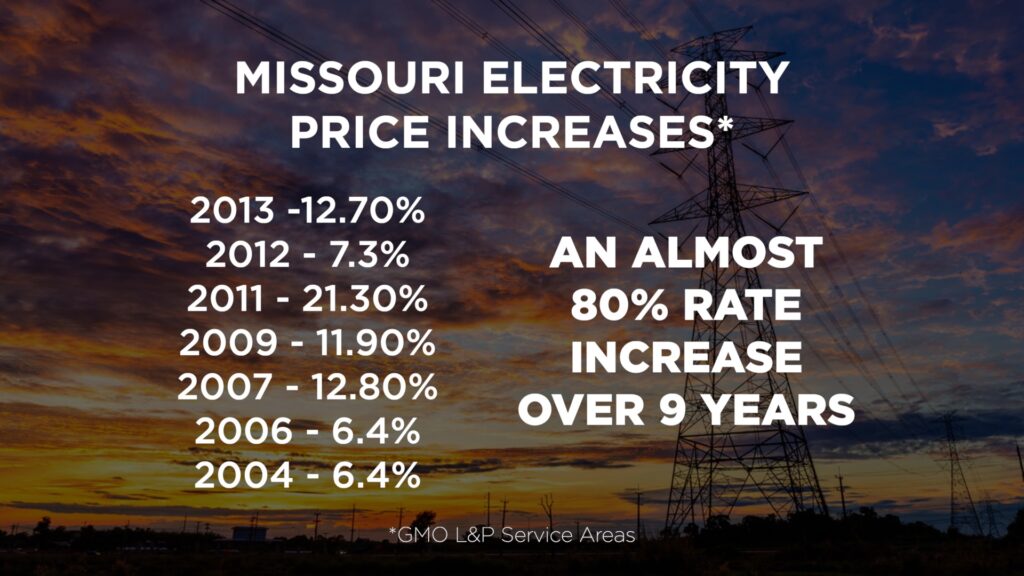
It’s difficult to predict electricity prices in the short term, but history has shown the cost almost always increases.
Here’s the key: even modest rate increases over time mean that staying tethered solely to utility-supplied power, without putting money toward a renewable asset like solar, leaves households and businesses exposed to ongoing cost pressure. Solar shifts that dynamic by locking in predictable energy production and reducing net consumption of utility electricity.
Solar’s Real Financial Impact
Here’s what solar plus net metering delivers in hard dollars:
-
Big bill reductions: Solar systems can offset 50–100 % of your annual electricity usage. That translates to lower bills year after year.
-
Year-over-year savings growth: As utility rates gradually rise (even modestly), the value of solar production increases too. That means the savings benefit of solar grows with utility rates.
-
Hedging against market risk: Solar fixes a portion of your energy cost for 25+ years. Utilities must pass through fuel, infrastructure, and regulatory costs — solar owners are insulated from those.
-
Tax incentives and financing: Federal, state, and financing incentives further reduce upfront costs and improve return on investment.
In other words, solar isn’t just clean energy. It’s financial leverage.
Net Metering + Solar: Local Examples
For Kansas and Missouri customers connected to Evergy’s grid:
-
The ability to “net out” energy you produce against what you consume each month means your utility bill reflects net demand, not gross demand.
-
During high production months, you earn credits that reduce your overall annual cost of electricity.
-
This practical benefit is one of the main reasons solar homeowners see payback periods of 7–10 years, and then decades of effectively free energy after that.
Couple that with predictable utility rate behavior, and you have a powerful cost advantage.
Estimate Your Solar Savings
See how solar and net metering can reduce your Evergy electric costs over time.
Conclusion: Solar Is a Smart Hedge Against Utility Costs
Even if utilities like Evergy have managed rate increases prudently, the long-term trend, influenced by inflation, infrastructure investment, and grid modernization, still points toward rising energy costs. Net metering lets solar owners capture the full value of their solar production against those costs.
By installing solar and taking advantage of net metering, Kansas and Missouri homeowners and businesses can:
-
Reduce or eliminate monthly electricity charges
-
Protect themselves from future rate increases
-
Build equity in a renewable asset that pays dividends for decades
The economics make sense today and they’ll only make more sense as utilities lean into modernization and electrification.
Ready to see how solar can save you money? Contact Good Energy Solutions for a personalized savings analysis.
SEE IF YOUR HOME OR BUSINESS IS A GOOD MATCH FOR SOLAR
GET A FREE QUOTEFrequently Asked Questions
What is net metering and how does it help solar customers save money?
Net metering allows solar customers to send excess electricity their system produces back to the grid in exchange for credits that offset the electricity they draw from the utility later. This reduces the net amount of utility power you pay for each billing cycle, increasing overall savings. :contentReference[oaicite:0]{index=0}
How do net metering credits work on my utility bill?
When your solar panels generate more power than your home uses, the surplus is recorded by a bi-directional meter and credited to your account. At the end of the billing period, the utility compares what you drew from the grid with what you supplied, and you’re billed only for the net difference, often resulting in substantial credits. :contentReference[oaicite:1]{index=1}
Do net metering credits expire or roll over?
Unused net metering credits can roll forward within the utility’s annual billing cycle. However, credits that remain at the end of the specified annual period may expire, depending on the utility’s policy. :contentReference[oaicite:2]{index=2}
Why is self-consuming your solar energy more valuable than exporting it?
Energy you use directly from your solar system offsets electricity you would otherwise buy at the full retail rate — including generation, delivery, and utility charges. Excess energy exported to the grid is typically credited at a lower avoided cost rate, making self-consumption the most valuable use of your solar production. :contentReference[oaicite:3]{index=3}
Will solar still save me money if utility rates don’t rise quickly?
Yes. Even modest long-term rate increases still mean you’re reducing the amount of utility power you purchase over time. Solar production offsets consumption at today’s rates, and any future increases make those avoided costs even more valuable — providing growing savings over the life of your system. :contentReference[oaicite:4]{index=4}
How much of my electric bill can solar offset with net metering?
A properly sized solar system paired with net metering can often offset between 50% and 100% of a home’s annual electricity usage, significantly reducing or even eliminating monthly utility charges. :contentReference[oaicite:5]{index=5}
Why is solar considered a good long-term financial hedge?
Solar provides predictable energy production over 25+ years, helping fix a portion of your energy cost while protecting you from market-driven utility price increases. Combined with net metering, this can lead to decades of effectively lower or near-zero electricity bills. :contentReference[oaicite:6]{index=6}
 Our mission at Good Energy Solutions is to provide our customers with honest, real solutions to reduce their fossil fuel consumption and lower their long term energy costs. Our combination of hands-on experience, education, and outstanding customer service make our company the clear choice to help you achieve your energy goals.
Founded in 2007 by Kevin and Shana Good, Good Energy Solutions has earned a reputation for our expert reliable service, long workmanship warranties, and quality commercial and residential solar installations.
We are engineers and craftsmen designing for efficiency while keeping aesthetics and longevity in mind. Because of our installation quality and customer service, Good Energy Solutions' solar panel systems feature some of the longest product and service warranties in Kansas and Missouri. Also, we have more NABCEP® Certified Solar Professionals on staff than any other company in Kansas or Missouri. To achieve this certification, PV installers must demonstrate that they possess extensive solar PV installation experience, have received advanced training, and passed the rigorous NABCEP certification exam.
If you would like to know more about solar power for your home or business, contact us here.